Education
Lost-Wax Jewelry Casting, From Pattern to Finished Piece
See the real Cast House path from a wax or printed pattern to a fresh casting, bench cleanup, stone setting, and final polish.
Lost-wax jewelry casting is not a button that turns a drawing into finished jewelry. The casting is one stage in a longer build. The design has to work in metal, the pattern has to feed correctly, and the raw casting still needs a goldsmith at the bench.
This is the process Yao handles at Cast House. The photos below are Cast House work: a fresh casting tree, an actual CAD-to-metal project, and a finished ring held in the same hands that worked on it. If you are deciding whether casting fits your own ring, pendant, link, or small sculptural piece, this guide shows what happens and what Yao needs from you.
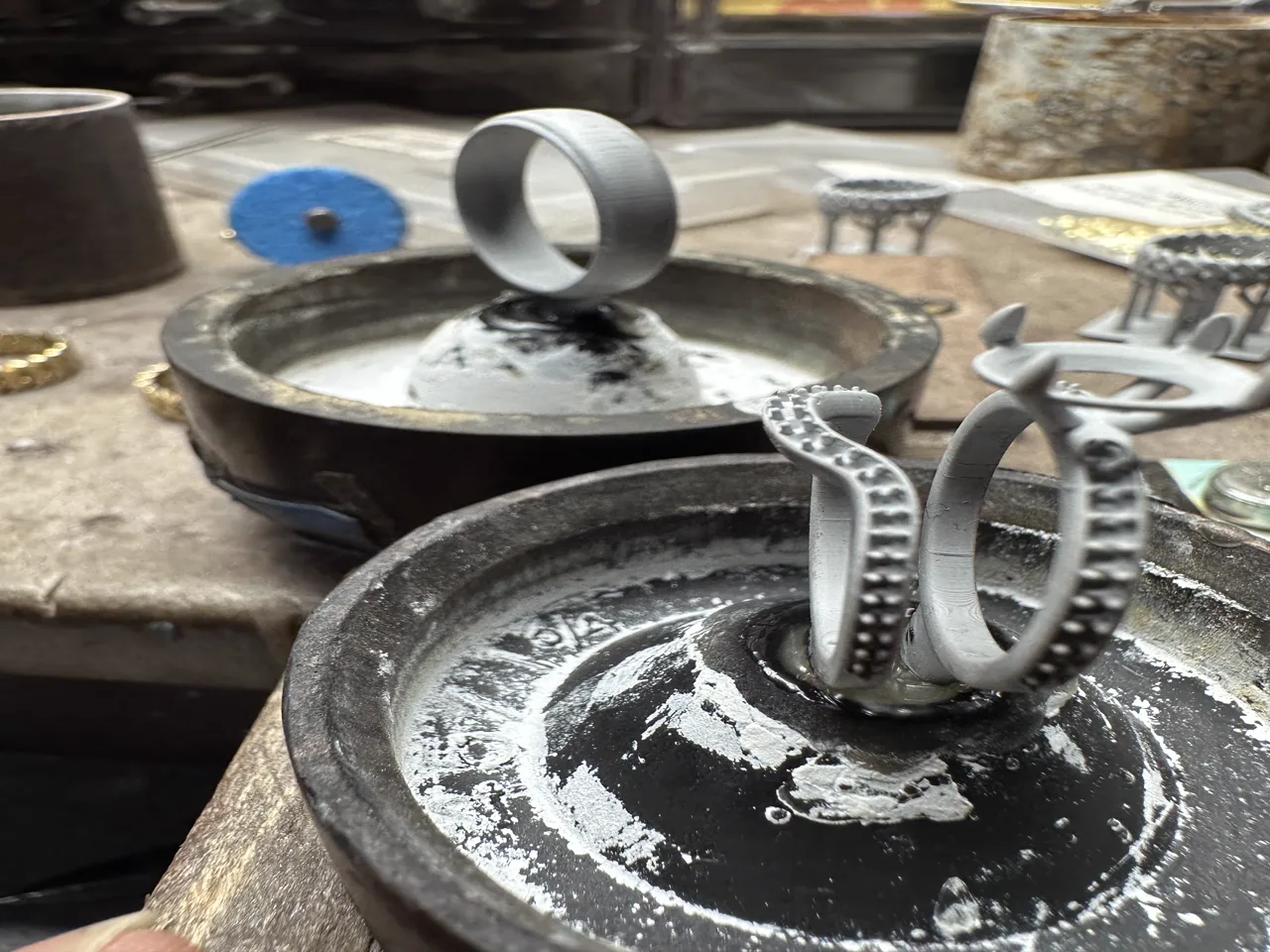
A fresh Cast House casting tree. The pieces are in metal, but they are nowhere near finished.
What lost-wax jewelry casting actually does
Lost-wax casting is an investment-casting process used to turn a temporary pattern into a metal part. For jewelry, that pattern may be carved in wax, injected from a mold, milled, or printed in a castable material. The pattern is surrounded by investment inside a flask. During burnout, the pattern is removed and the investment becomes the mold that receives the metal.
That basic sequence is simple to describe. Making a clean, wearable piece is not. The result depends on decisions made before, during, and after the pour: wall thickness, stone fit, finishing access, sprue placement, pattern material, burnout, alloy handling, and the cleanup the design will allow.
The Cast House bench sequence
1. Make the design work as jewelry
A build can begin with a drawing, photograph, existing piece, hand-carved wax, or CAD file. Before anything reaches a flask, Yao looks at the piece as something that must be cast, cleaned, assembled, set, polished, and worn.
A model can look perfect on a screen and still create trouble in metal. Thin areas may not fill as intended. A hidden corner may be impossible to polish. A stone seat may need more room. A heavy section beside a light section may change how the piece should be fed. Resolving those problems before casting saves metal and prevents a bad design from becoming a bad casting.
2. Make the pattern
The production pattern can be carved directly in wax, injected from a reusable mold, milled from wax, or printed in a castable material. The pattern is not a rough placeholder. Its surface and construction carry into the mold, so seams, print marks, support scars, and weak geometry must be dealt with before metal reproduces them.
Traditional wax and printed castable material may also need different investment and burnout instructions. There is no single schedule that fits every pattern, flask, investment, alloy, and piece.
3. Sprue the piece and build the tree
Sprues create the routes through which the pattern leaves the flask and molten metal enters the mold. Their size and location affect metal flow, shrinkage, cleanup, and the surface Yao must restore after cutting the piece free. Multiple patterns may share a tree when the casting setup calls for it.
4. Invest the flask
The tree is placed in a flask and surrounded by liquid investment, a purpose-made mold material. It is mixed and handled to the manufacturer's instructions. Air trapped against the pattern can become bumps or defects in the metal, so this stage is controlled rather than rushed.
5. Burn out the pattern
The flask moves through a controlled heating schedule. The pattern drains or burns away, remaining material is cleared, and the investment is prepared to receive metal. The correct schedule depends on the materials and equipment being used. A generic temperature copied from a chart is not a substitute for matching the schedule to the actual job.
6. Cast the metal
The alloy is melted and introduced into the prepared mold. Jewelry shops may use centrifugal, vacuum, or pressure-assisted equipment to move metal through the feed system before it solidifies. The right setup depends on the alloy, equipment, flask, and geometry of the piece—not only the melting point of pure metal.
7. Break out the casting and begin the bench work
After the metal has solidified and the flask reaches the proper handling condition, the investment is removed. The raw pieces are cut from the tree and inspected. Then the goldsmithing starts:
- remove the sprue and restore the surrounding surface;
- file and sand the casting skin;
- correct accessible surface defects;
- assemble or solder separate parts when the design calls for it;
- prepare stone seats and set stones; and
- bring the piece through its agreed texture and final polish.
Casting creates the metal form. It does not make that form finished, comfortable, or ready to wear.
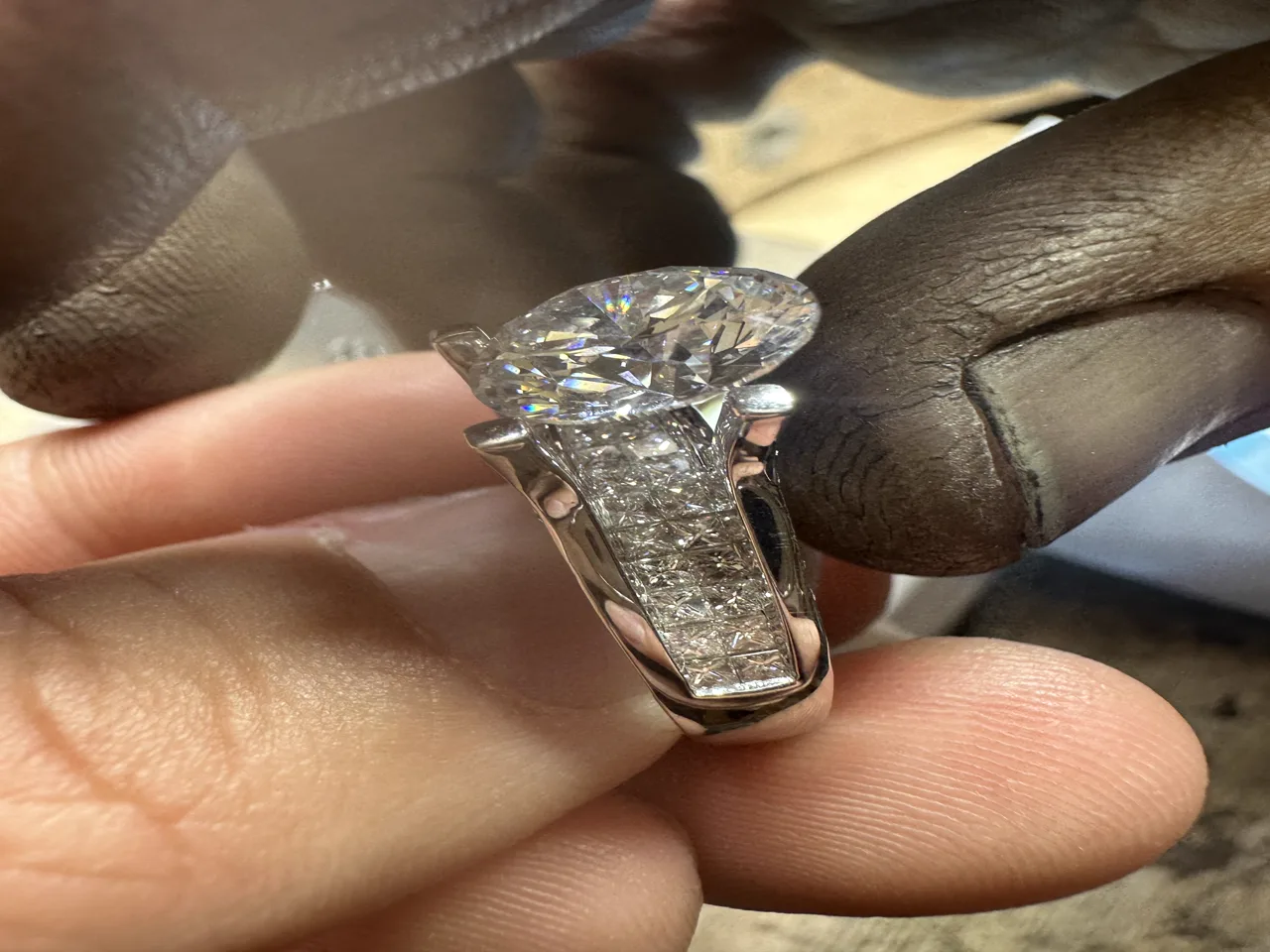
The finished surface is the result of the work after casting. Dirty hands, clean work.
A real Cast House path: reference, CAD, and finished metal
This marquise setting began with a reference image. A photograph can show the direction, but it cannot define every dimension, hidden surface, stone seat, or construction decision. Yao first worked out the setting as a three-dimensional model.
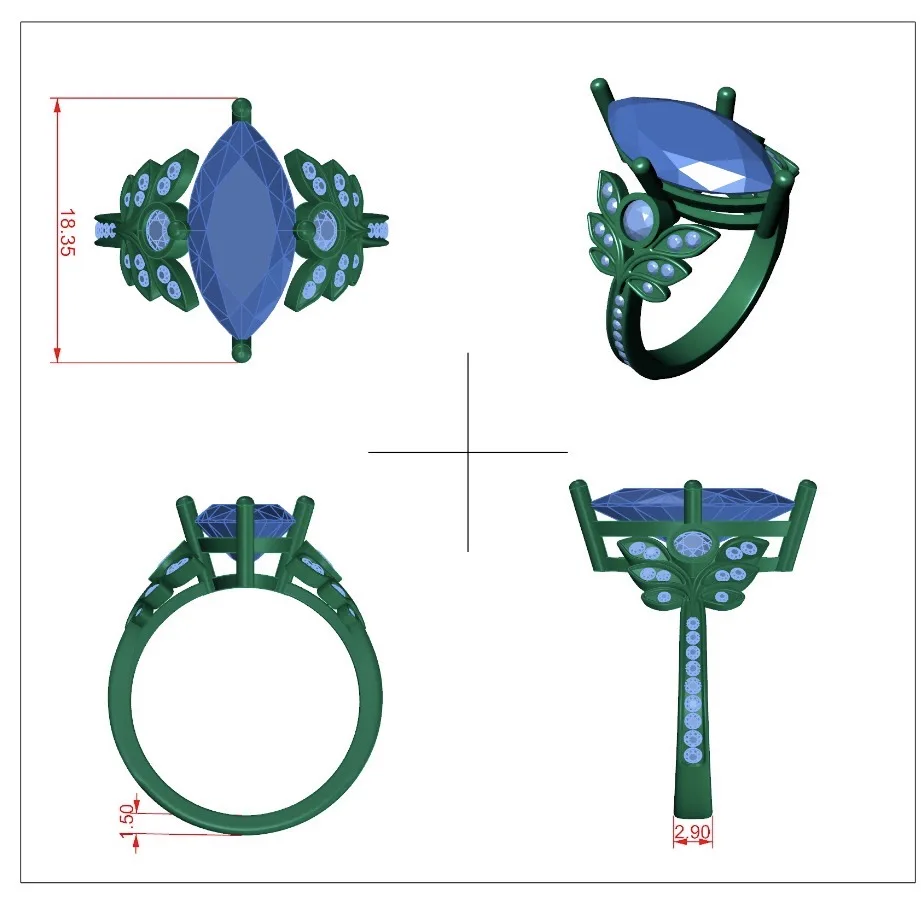
The CAD was not the finished product. It was the plan used to resolve proportion and construction before making the piece in metal. The finished setting below shows how those decisions carried into the actual build.
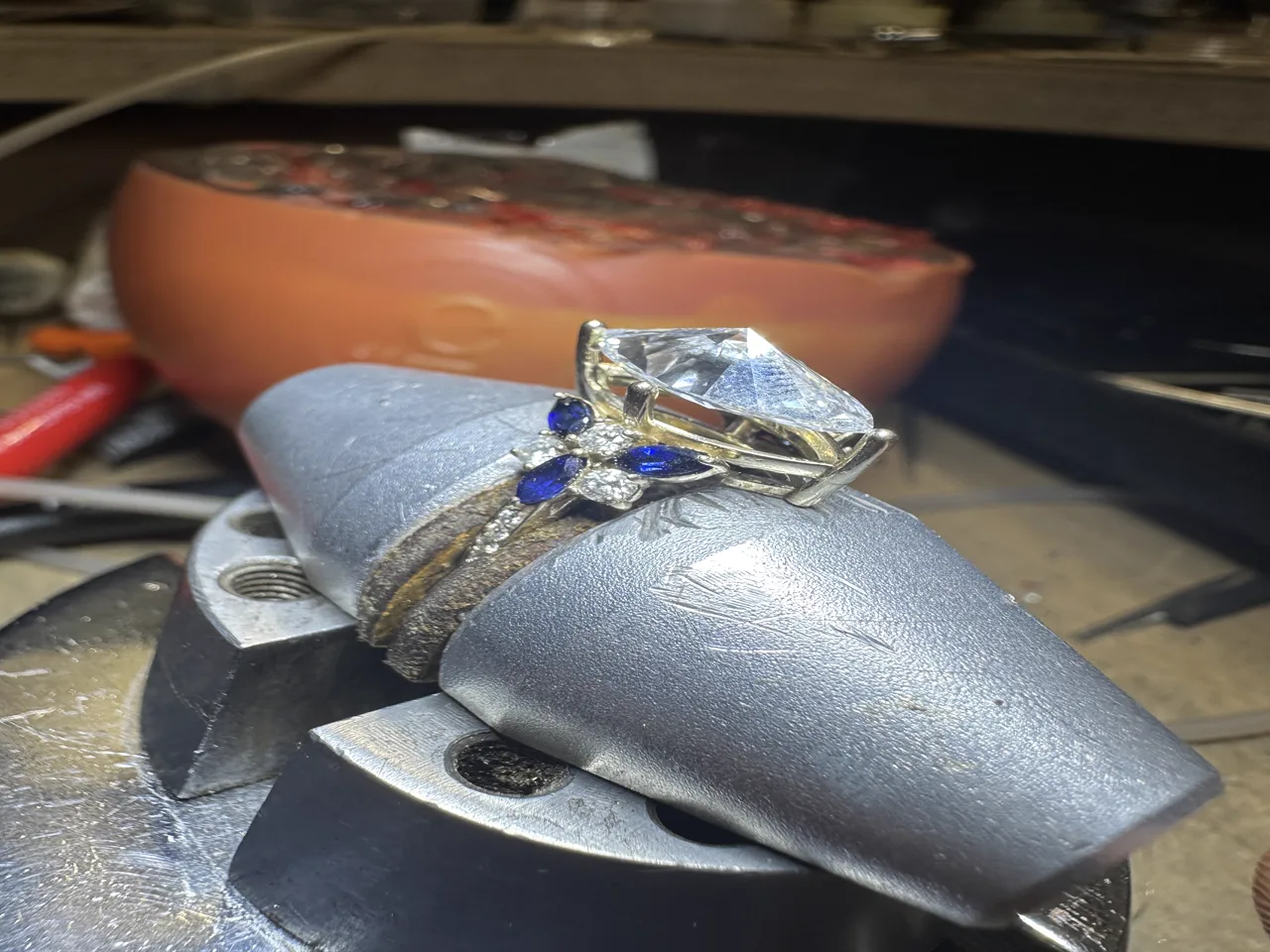
See the two images together in the marquise reference-to-finished-piece project. For casting-specific work in progress, see casting at one bench.
What lost-wax casting is good at—and when not to force it
Casting is useful when a piece needs three-dimensional form, repeated design elements, or geometry that would be inefficient to fabricate entirely from sheet and wire. Rings, pendants, settings, links, and small sculptural forms can all be candidates.
That does not mean every piece should be cast as one object. Some work is better fabricated, assembled from separate parts, or redesigned before production. The method should follow the piece. Yao reviews the design before promising that casting is the right route.
What Yao needs before quoting a casting project
You do not need a finished CAD file. A useful first message includes what you already have and the result you want:
| What to send | What it helps resolve | | --- | --- | | A sketch, photograph, old piece, wax, or CAD file | The starting point and how much design preparation remains | | Approximate dimensions, ring size, and quantity | Scale, fit, pattern strategy, and repeat-production needs | | Preferred metal and stones | Alloy, weight, construction, and setting work | | Raw casting or finished jewelry | Whether the quote includes cleanup, assembly, setting, and polish | | Budget range, delivery state, and important date | Whether the scope and delivery plan are realistic |
Wait for Yao's instructions before shipping an existing piece, loose stones, or a physical pattern. Their condition and suitability need to be discussed for the actual project.
What affects the work and price
There is no honest one-price answer for every casting. The quote depends on:
- Starting material — a sketch, reference, existing model, or production-ready file requires a different amount of preparation.
- Geometry — thickness, scale, sprue access, undercuts, and finishing access all affect the plan.
- Metal and alloy — precious-metal choice affects weight, handling, and material cost.
- Quantity — a single custom build and repeat production use different pattern and mold strategies.
- Bench work after casting — assembly, stone setting, surface treatment, and final polish are separate parts of the finished result.
Compare quotes by what they actually include. Preparing the model, casting metal, cutting and cleaning the raw piece, assembly, stone setting, and final polishing are not the same scope. A low casting fee can still leave most of the bench work unfinished.
Read verified Fiverr buyer reviews and look at both finished jewelry and work in progress. A rendering proves that someone can show a design. A casting tree and a finished piece help prove that the metalwork happens too.
Questions buyers ask about lost-wax jewelry casting
Is a raw casting ready to wear?
Usually there is still bench work to do. Removing sprues, smoothing surfaces, assembly, stone setting, and the final finish depend on the piece. Clarify whether you are commissioning a raw casting or completed jewelry.
Can a photograph become a cast piece?
A photograph can start the design conversation, but it does not specify every dimension or hidden detail. The shape, scale, construction, and any changes you want still have to be resolved before a castable model is made.
Can I commission a single piece?
Yes. An individual custom piece can be the whole project. Share the quantity and your intended result so the preparation and quote match what you need.
Can Cast House work with clients outside California?
Yes. Cast House accepts nationwide inquiries. The design conversation can begin online with photographs, drawings, measurements, and files. Yao confirms the scope and delivery arrangements before an order is created.
Do I need to know the casting method before contacting Yao?
No. Bring the piece you want to make and the best reference you have. Yao can tell you whether the design fits lost-wax casting, needs changes, or should use another construction method.
Technical references
Have a piece to cast or a reference to build from? See Cast House's gold and silver jewelry casting service, start a private inquiry, or order through Fiverr.
Ready to Start Your Project?
Bring the reference, drawing, old piece, or hard-to-find idea. Yao will review what the real build needs.